What REST Really Is: Clearing Up Confusion
What REST really is and why it's not the same as HTTP
Gajanan Rathod
Let’s get this straight—<mark>REST is not a communication protocol.</mark> I know, I know, most tutorials and even some engineers casually say “REST API means HTTP API” and then throw in a bunch of GET and POST examples like that’s the whole story. But dig a little deeper , and *<mark>you’ll see a very fine but important line that separates REST from HTTP.</mark>*
REST is not HTTP
REST, short for **Representational State Transfer**, is actually **<mark>just a style</mark>**—a set of **rules or architectural constraints** that define how you should design your APIs. That’s it. It’s not a tool. Not a protocol. Not a library.
But yes, HTTP is the **most common** protocol REST is used with—because it's available, reliable, and works great for the web. But in theory, REST can also run over **UDP, WebSockets,** or even carrier pigeons (lol maybe not pigeons 🐦).
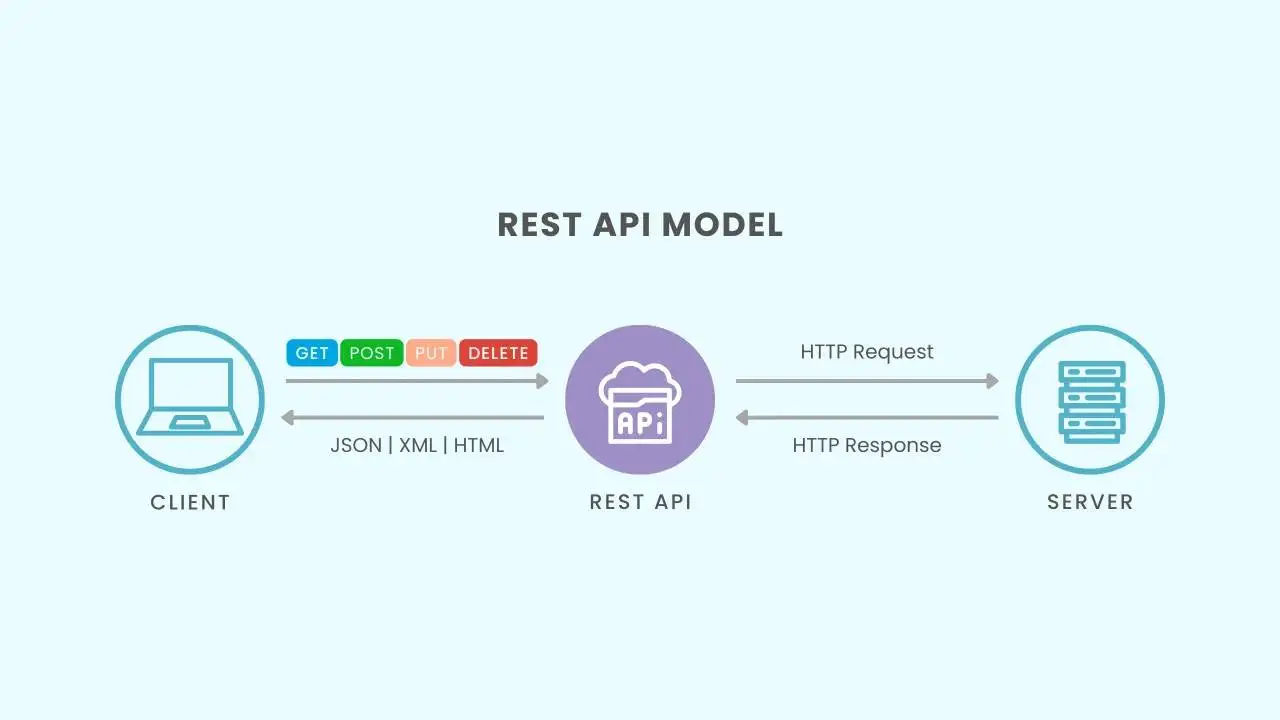
So, what does REST actually mean?
Here’s REST in easy terms:
* Every resource (like user , product, post) should be **<mark>uniquely addressable</mark>**—usually by a URL. 👉 `/users/123` or `/products/789` * You should use **<mark>standard verbs</mark>** like `GET` , `POST` , `PUT` , and `DELETE` to act on those resources. * It should be **<mark>stateless</mark>**—the server doesn’t remember what you did last time. Every request must contain all the info needed. * And responses should return **<mark>representations</mark>** (usually JSON or XML) of the data—not just some raw message.
REST is Simple, but Not the Fastest!
Now let’s bust another myth:
REST isn’t the only way to build APIs.
There’s **RPC** (Remote Procedure Call), **GraphQL**, **SOAP**, and others.
<mark>REST is </mark> **<mark>popular</mark>** <mark>because:</mark>
* It’s **easy** to understand * Maps directly to web URLs * Works naturally with browsers and HTTP clients
**<mark>But:</mark>**
* It can be **slower** than RPC because it often involves more overhead * It’s **less flexible** when you want to query deeply nested data (which is where GraphQL shines)
<mark>So people building ultra-fast systems</mark> (like game servers, micro-services talking internally, or trading apps) often use **gRPC** or **GraphQL**, not REST.
REST vs HTTP vs RCP\\gRCP vs GraphQL
| **Concept** | **What it is** | **Common Protocol Used** | **Speed** | **Use Case** | | --- | --- | --- | --- | --- | | **REST** | Design style | HTTP (commonly) | Moderate | Web APIs, CRUD | | **HTTP** | Communication protocol | HTTP | Varies | Browsers, clients | | **RPC / gRPC** | Function call style | HTTP 2, TCP | Fast | Microservices | | **GraphQL** | Query language | HTTP, WebSockets | Fast | Complex queries |
Final Thoughts
REST is awesome, and it feels like the web. But it’s not the only way. And definitely **<mark>not the same as HTTP.</mark>**